
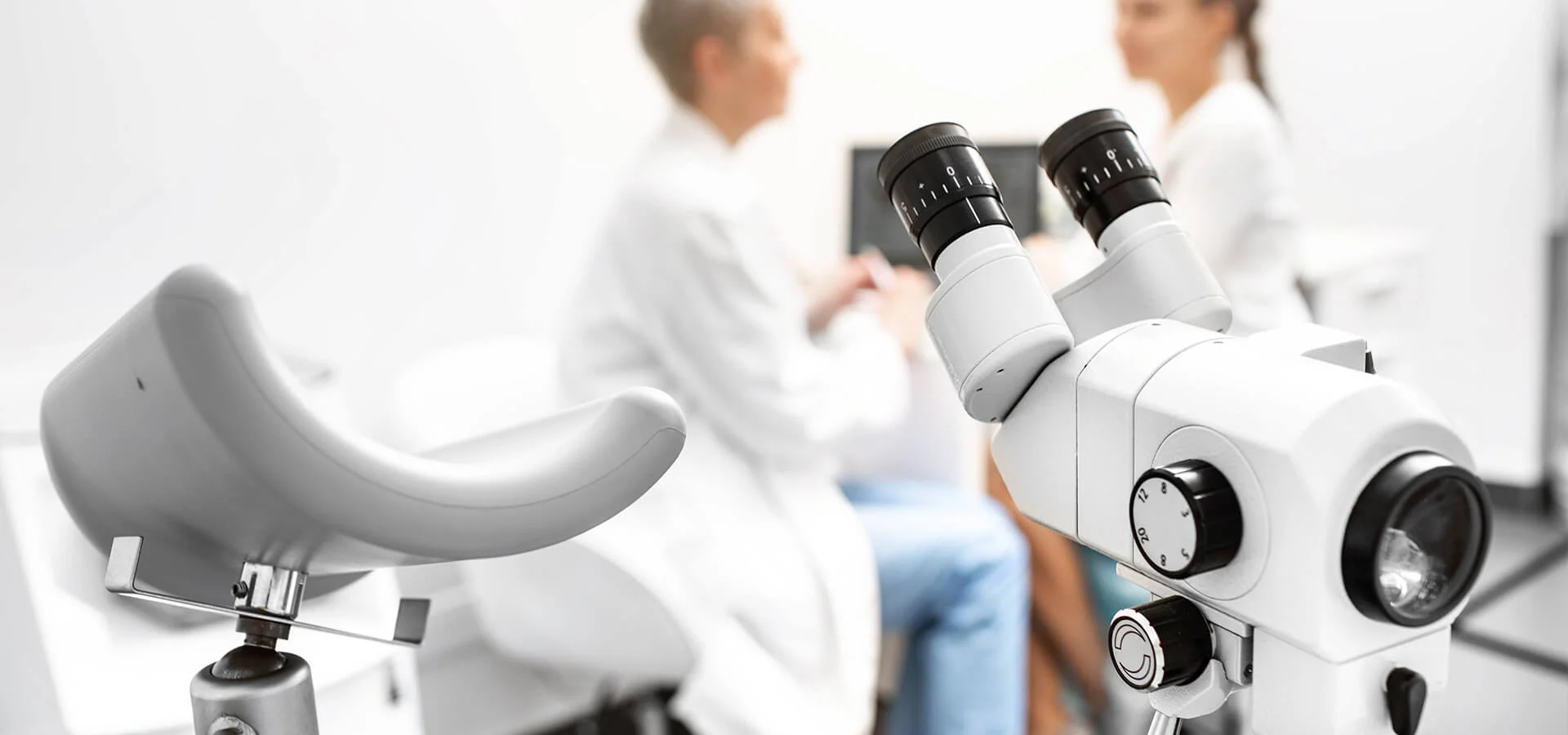
If your HPV test came back positive or cellular changes were detected in your Pap smear, the first question that often comes to mind is “What happens next?” These results alone do not mean that you have cervical cancer. Colposcopy is an important diagnostic method that allows suspicious areas of the cervix to be examined under magnification and, when necessary, enables a biopsy to be taken from the appropriate area. In this way, cellular changes that cannot be seen with the naked eye can be evaluated more closely, helping to plan the next follow-up or treatment process more accurately.
Izmir gynecologist Op. Dr. Sadık Sözdinler evaluates HPV and abnormal Pap smear results together with the patient’s age, previous follow-up results, and current findings, and determines the need for colposcopy on an individual basis.
What Is Colposcopy?
Colposcopy is a detailed examination of the cervix using a colposcope, a device equipped with a special magnification and light system. When necessary, the vagina and vulva may also be examined using the same method.
The colposcope does not enter the vagina. It is positioned outside the body and provides a magnified view of the tissues being examined. If a suspicious area is detected, a small tissue sample may be taken and sent for pathological examination.
Why Is Colposcopy Performed?
Colposcopy may be recommended in the following situations:
-
Abnormal Pap smear results
-
Certain high-risk HPV-positive results
-
Suspicious appearance of the cervix
-
Follow-up of previously detected cellular changes
-
Evaluation of suspicious areas in the vulva or vagina
Is Colposcopy Performed After a Positive HPV Test?
A positive HPV result does not automatically mean that colposcopy is required. The HPV type, Pap smear result, age, previous screening results, and individual risk profile are evaluated together.
Colposcopy may be necessary especially in the presence of high-risk HPV types or certain accompanying cellular abnormalities. The purpose is not to “see” HPV itself, but to determine whether HPV has caused cellular changes in the cervix.
How Is Colposcopy Performed?
The procedure is performed in a similar way to a routine gynecological examination. A speculum is inserted into the vagina so that the cervix can be clearly visualized.
Special solutions may be applied to the cervix to make abnormal cellular changes more visible. The doctor then examines the cervix under magnification using the colposcope.
If a suspicious area is identified, a colposcopic biopsy may be performed. A small tissue sample is taken and examined in a pathology laboratory. Depending on the planned procedure and the patient’s needs, local anesthesia or another form of pain control may be used. After a short observation period, most patients can return home the same day.
Is Colposcopy Painful?
For many women, colposcopy itself causes discomfort similar to a routine gynecological examination rather than significant pain. If a biopsy is required, a brief pinching, stinging sensation, or cramping similar to menstrual pain may be felt. The experience varies from person to person.
If discomfort occurs during the procedure, it is important to inform the doctor.
How Long Does Colposcopy Take?
Colposcopy is usually a relatively short procedure, and many patients can return to their normal daily activities the same day.
Depending on the extent of the examination and whether a biopsy is required, the procedure generally takes around 15–30 minutes.
What Is a Colposcopic Biopsy?
A colposcopic biopsy is the removal of a small tissue sample from an area that appears abnormal during colposcopy.
A biopsy is not required during every colposcopy. It may be performed when the doctor identifies a suspicious area and wants to clarify the diagnosis.
Pathological examination helps determine whether cellular changes are present and, if so, their severity.
What Do Colposcopy Results Mean?
Colposcopy may reveal normal tissue or low-grade or high-grade cellular changes.
An abnormal Pap smear or HPV result does not mean a diagnosis of cancer. Likewise, undergoing colposcopy does not mean that a person has cancer.
Depending on the biopsy result, follow-up alone may be sufficient, or further evaluation and treatment may be planned according to the degree of cellular change.
What Should You Pay Attention to After Colposcopy?
If only a colposcopic examination is performed, patients can usually return to their normal activities shortly afterward. If a biopsy is taken, mild bleeding, brown discharge, or cramps similar to menstrual pain may occur for a few days.
While bleeding or discharge continues after a biopsy, the doctor’s recommendations regarding tampon use and sexual intercourse should be followed.
If heavy bleeding, fever, foul-smelling discharge, or severe pain develops, the doctor should be contacted.
Reviews from Patients Who Have Had Colposcopy
For colposcopy or genital wart treatment, you can access reviews about Izmir obstetrician, gynecologist and genital aesthetics specialist Op. Dr. Sadık Sözdinler by clicking the relevant text and links on Google, DoktorTakvimi, and DoktorSitesi.
Which Department Should You Visit for Colposcopy?
For colposcopy, patients should consult the Obstetrics and Gynecology Department. Following the examination, the appropriate follow-up or treatment plan is determined individually according to the patient’s general health and clinical findings. Genital aesthetics specialist Op. Dr. Sadık Sözdinler provides individualized evaluation and treatment planning for suitable patients.
Colposcopy in Izmir
For women researching colposcopy in Izmir, the decision to perform the procedure should not be based solely on whether an HPV test is “positive.” The HPV type, Pap smear result, previous tests, age, and current gynecological findings should all be evaluated together.
Izmir gynecologist Op. Dr. Sadık Sözdinler determines the need for colposcopy individually when evaluating HPV, Pap smear abnormalities, and cervical conditions in Izmir, and plans biopsy and follow-up when necessary.
Frequently Asked Questions
Does Being Referred for Colposcopy Mean I Have Cancer?
No. Being referred for colposcopy does not mean that you have cancer. Many abnormal screening results are related to HPV infection or early cellular changes.
Is Anesthesia Required for Colposcopy?
Anesthesia is generally not required for a standard colposcopic examination. The approach may vary if additional procedures are planned.
Can Colposcopy Be Performed During Menstruation?
Heavy menstrual bleeding may make it more difficult to evaluate the cervix. If you are bleeding at the time of your appointment, it may be appropriate to contact your doctor or clinic beforehand.
Can You Have Sexual Intercourse Before Colposcopy?
You may be advised to avoid vaginal intercourse, tampons, or vaginal products for a short period before the procedure. The preparation instructions provided by your doctor should be followed.
Is Bleeding After Colposcopy Normal?
If a biopsy has been taken, mild spotting, bleeding, or brown discharge may occur for a few days. Heavy bleeding should be medically evaluated.
When Can Sexual Intercourse Be Resumed After Colposcopy?
If a biopsy has been performed, sexual intercourse may need to be avoided for a certain period to allow the tissue to heal. The exact duration depends on the extent of the biopsy and the healing process.
Can Colposcopy Be Performed During Pregnancy?
When medically indicated, colposcopic evaluation can be performed during pregnancy. Pregnancy should always be reported to the doctor before the procedure.
Does Colposcopy Eliminate HPV?
No. Colposcopy is not a treatment that removes HPV. It is used to evaluate cellular changes that HPV may cause in the cervix.
What Does CIN Mean After Colposcopy?
CIN refers to cellular changes in the cervix and is not the same as cancer. Depending on its grade, follow-up or treatment may be required.
Is Another Pap Smear or HPV Test Needed After Colposcopy?
It may be necessary. The follow-up interval is determined individually according to the colposcopy findings, biopsy result if performed, HPV status, and previous test results.
This article is for informational purposes only and is not intended for diagnosis or treatment.
Op. Dr. Sadık Sözdinler | Obstetrics, Gynecology and Genital Aesthetic Specialist
Quick Appointment
Fill out our contact form now, and we will get back to you as soon as possible.