
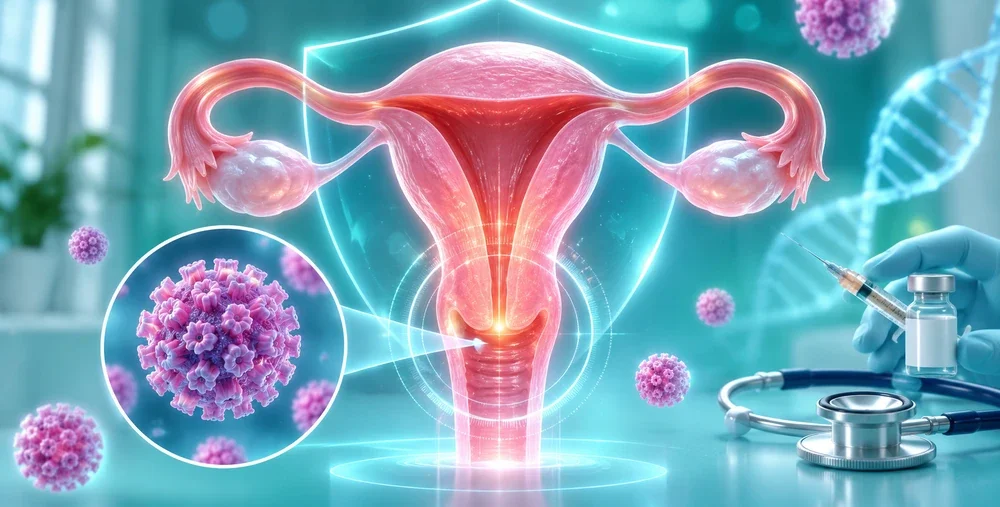
Testing positive for HPV does not mean you have cancer. A positive HPV test indicates that the human papillomavirus (HPV) has been detected in a sample collected from the cervix. Most HPV infections are controlled by the immune system over time. However, when certain high-risk HPV types persist in the body for an extended period, they can cause changes in the cells of the cervix. If you test positive for HPV, the most important factors are the type of HPV detected, your Pap smear results, and attending regular follow-up examinations as recommended.
What Does HPV Positive Mean?
HPV positive means that the human papillomavirus (HPV) has been detected in your test results. HPV tests used for cervical cancer screening generally detect high-risk HPV types associated with the development of cervical cancer.
A positive HPV test does not necessarily mean that you have cervical cancer or precancerous changes in the cells of your cervix.
Does Testing Positive for HPV Mean You Have Cancer?
No. Not every woman who tests positive for HPV has cervical cancer. HPV is an extremely common virus. Most HPV infections become undetectable within one to two years as the immune system controls the infection. However, appropriate follow-up with a gynecologist remains important.
If a high-risk HPV infection persists for several years, it can cause precancerous changes in cervical cells.
For this reason, a positive HPV test result should not be ignored, and recommended follow-up examinations should be completed.
What Should You Do If You Test Positive for HPV?
If your HPV test is positive, the first step is to consult a gynecologist.
Your doctor will consider several factors, including:
-
HPV Type: Which HPV type has been detected
-
Pap Smear Results: Whether abnormal cervical cells are present
-
Previous Test Results: Your cervical screening history
-
Individual Risk Factors: Your personal medical history and other relevant risks
Based on these findings, your doctor will determine whether additional testing, repeat screening, or a colposcopy is necessary.
What Does HPV 16 or HPV 18 Positive Mean?
HPV 16 and HPV 18 are high-risk HPV types most strongly associated with cervical cancer. Testing positive for either of these types does not mean you have cancer. However, these infections require closer medical evaluation and follow-up than some other HPV types.
If HPV 16 or HPV 18 is detected, colposcopy is generally recommended even when the Pap smear result is normal.
What Does HPV Positive but Pap Smear Negative Mean?
HPV positive but Pap smear negative means that HPV has been detected, but no abnormal cervical cell changes were identified during the Pap smear examination.
The next step depends on the type of HPV detected and your previous cervical screening results.
If HPV 16 or HPV 18 is detected, colposcopy is generally recommended. For other high-risk HPV types, repeat testing after approximately one year may be recommended for suitable patients.
Why Is Colposcopy Performed in Women Who Test Positive for HPV?
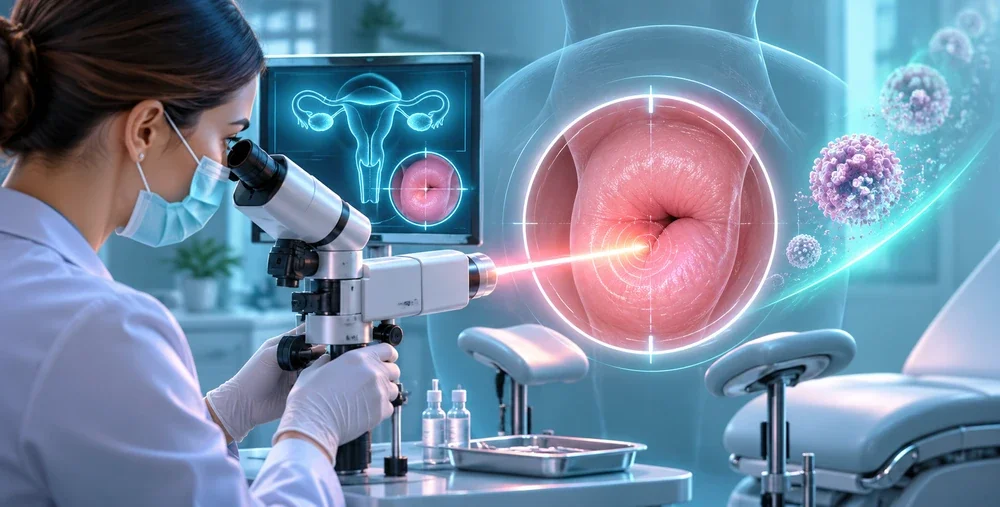
Colposcopy is a procedure used to examine the cervix in detail with a special magnifying instrument called a colposcope.
It may be recommended when HPV testing and Pap smear results indicate a possible risk of abnormal cervical cell changes.
The procedure is usually completed within a short period. Colposcopy can often be performed without anesthesia, although local anesthesia or other pain management options may be used when necessary. Some patients may experience mild discomfort, particularly if a biopsy is required.
If a suspicious area is identified during the examination, a small tissue sample may be collected and sent to a laboratory for biopsy.
Not every woman who tests positive for HPV needs a colposcopy.
How Is HPV Positivity Treated?
There is currently no proven medication that directly eliminates HPV from the body.
Treatment focuses on managing conditions caused by HPV, such as genital warts or abnormal cervical cell changes.
If precancerous changes are detected in the cervix, the doctor may recommend regular monitoring or procedures such as LEEP (Loop Electrosurgical Excision Procedure), depending on the severity of the changes.
Not everyone who tests positive for HPV needs medication or surgery.
How Long Does It Take for HPV to Become Negative?
Most HPV infections are controlled by the immune system within one to two years and may become undetectable on subsequent HPV tests.
However, the virus may persist for longer in some people. There is no exact timeframe that applies to everyone.
If HPV remains positive for an extended period, regular cervical screening and medical follow-up are important.
Can You Have Sex If You Are HPV Positive?
Testing positive for HPV does not mean that sexual intercourse is completely prohibited.
HPV is transmitted through sexual contact. Using condoms can reduce the risk of transmission, but it cannot eliminate the risk entirely.
Because HPV can remain in the body without causing symptoms for many years, a positive test result cannot determine when the infection occurred or from whom it was acquired.
Can You Get the HPV Vaccine If You Are Already HPV Positive?
Yes. People who test positive for HPV may still receive the HPV vaccine if they are eligible.
However, the vaccine does not treat an existing HPV infection. Instead, it helps protect against HPV types that a person has not yet acquired.
The decision to receive the vaccine should be based on age, vaccination history, and individual risk factors.
Women who have received the HPV vaccine should continue to attend regular cervical cancer screenings.
Conclusion
Testing positive for HPV does not mean you have cancer. However, regular cervical screening and appropriate medical follow-up are particularly important when high-risk HPV types are detected.
The HPV type, Pap smear results, and previous screening history should be evaluated together to determine whether continued monitoring or colposcopy is necessary.
Op. Dr. Sadık Sözdinler, an Obstetrician and Gynecologist in Izmir, evaluates HPV test results and cervical health to develop personalized follow-up and treatment plans for patients who test positive for HPV.
Frequently Asked Questions About HPV Positivity
1. Does Everyone Who Tests Positive for HPV Develop Genital Warts?
No. Genital warts are most commonly associated with low-risk HPV types. People with high-risk HPV infections may not develop any visible genital warts.
2. Can You Get Pregnant If You Are HPV Positive?
Testing positive for HPV does not, by itself, prevent pregnancy. However, if abnormal cervical changes require additional treatment, pregnancy planning should be discussed with a gynecologist.
3. Could I Have Contracted HPV From My Partner?
Yes. HPV can be transmitted through sexual contact. However, because the virus can remain in the body without symptoms for many years, a positive HPV test cannot determine when or from whom the infection was acquired.
4. Do Men Who Test Positive for HPV Have Symptoms?
Most men with HPV do not experience any symptoms. Certain HPV types can cause genital warts. Routine HPV screening is generally not recommended for men.
5. Should a Pap Smear Be Repeated If You Are HPV Positive?
A repeat Pap smear or HPV test may be recommended when necessary. The timing of follow-up testing depends on the HPV type, Pap smear results, and previous cervical screening history.
6. Can HPV Be Detected After Menopause?
Yes. HPV can also be detected after menopause. In some cases, an infection acquired years earlier may become detectable again.
7. Does HPV Positivity Always Lead to Cancer?
No. Most HPV infections do not develop into cancer. The risk increases particularly when high-risk HPV types persist for several years.
Regular cervical cancer screening can help detect precancerous changes at an early stage, allowing appropriate follow-up and treatment when needed.
Medical Disclaimer: This article is intended for informational purposes only and does not constitute medical advice, diagnosis, or treatment. Please consult a qualified healthcare professional for personalized medical evaluation and care.
Quick Appointment
Fill out our contact form now, and we will get back to you as soon as possible.